
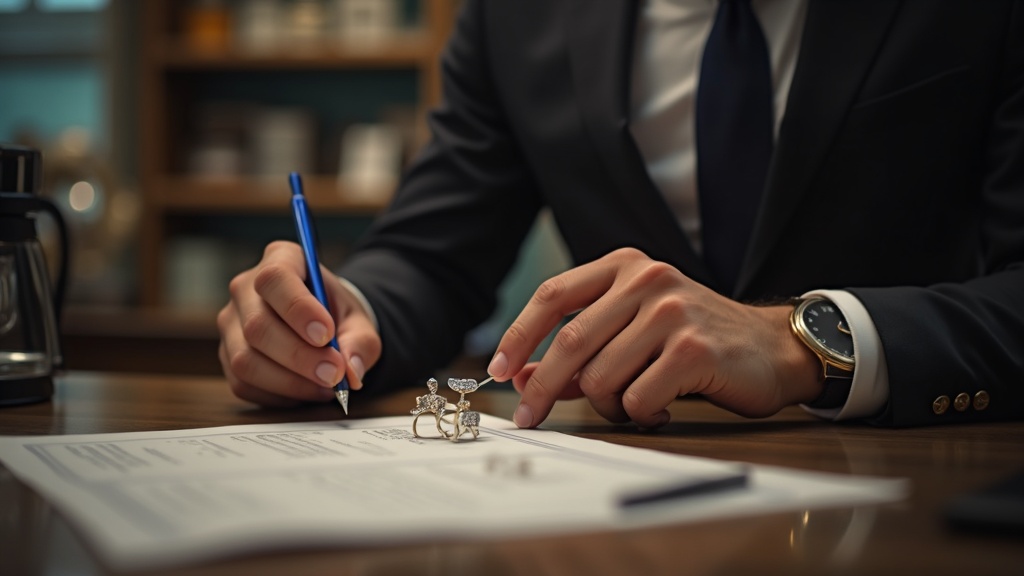
The single best way to negotiate price on a certified diamond at a pawn shop is to bring the actual certification papers with you — a GIA, AGS, or similar independent lab report that documents the stone’s carat weight, cut, color, and clarity. Without that paperwork, any offer you receive is based on a visual estimate, not verified fact, and estimates almost always land lower than documented value. Certification turns a guessing game into a negotiation grounded in real numbers.
This matters more than most people realize, and it matters more than the size of the stone itself. A large diamond with no papers and mediocre clarity can actually be worth less than a smaller, certified stone with excellent cut and color grades. Pawnbrokers and jewelers know this, which is why the paperwork — not the carat count — usually drives the conversation.
Why Certification Outweighs Size in a Pawn Negotiation
Size is the first thing most people notice about a diamond, but it’s only one of several factors that determine value. A pawnbroker evaluating your ring or loose stone has to consider the “Four Cs” — carat, cut, color, and clarity — and without certification, three of those four factors have to be estimated by eye or with basic in-house tools.
Certification papers remove the guesswork. They come from independent grading laboratories that have no financial stake in your transaction, which means the numbers on that report are treated as objective. When a pawnbroker can see documented clarity and color grades instead of estimating them, they can offer closer to true market value because they’re not building in extra caution for the unknown.
- Carat weight confirms exact size down to the hundredth of a carat.
- Cut grade reflects how well the stone was shaped to maximize brilliance.
- Color grade ranges from colorless to noticeably tinted, affecting value significantly.
- Clarity grade documents internal and surface characteristics invisible to the naked eye.
A one-carat diamond with a strong certificate showing near-colorless grading and high clarity can be worth considerably more than a 1.5-carat stone with visible inclusions and a weaker color grade. Without papers, that nuance gets lost, and offers tend to default toward the conservative end.
How to Negotiate Price on a Certified Diamond at a Pawn Shop
Negotiating well starts before you ever walk through the door. Preparation is what separates a fair deal from a rushed one, and it’s entirely within your control.
1. Bring the Original Certificate
Always bring the physical or digital certificate, not just a description of what it says. If the stone was certified but you’ve lost the paperwork, many labs allow you to look up the report by its number, which is often laser-inscribed on the stone itself. A pawnbroker will appreciate that you took the step to verify it.
2. Know the Current Market, Not Just the Purchase Price
What you paid years ago at retail is not what the diamond is worth today in resale or pawn value. Retail markups on diamonds are substantial, and pawn offers are based on wholesale and resale markets, not the original receipt. Understanding this ahead of time prevents disappointment and keeps the conversation realistic.
3. Ask How the Offer Was Calculated
A transparent pawnbroker should be able to walk you through how they arrived at their number using the certificate’s grading details. If an offer seems low, ask specifically which factor — cut, color, clarity, or carat — is bringing it down. This turns the negotiation into a conversation instead of a take-it-or-leave-it moment.
4. Get the Setting Evaluated Separately
If your diamond is mounted in a gold or platinum ring, the metal itself has separate melt value. Make sure the pawnbroker is pricing the stone and the setting as distinct components, since bundling them together can sometimes obscure the true breakdown of the offer.
5. Decide Between a Pawn Loan and an Outright Sale
A pawn loan lets you use the diamond as collateral and reclaim it later, while an outright sale means the transaction is final. Your negotiating leverage can shift depending on which route you choose, so decide this before discussing numbers. If you’re weighing the two options for jewelry more broadly, it’s worth reading through the differences before you commit either way.
Do Pawn Shops Buy Diamond Rings Without Certification?
Yes, most pawn shops will still evaluate and make an offer on a diamond ring without papers. It simply means the appraisal relies more heavily on in-house tools, visual inspection, and the experience of the person assessing it. The offer is likely to be more conservative because there’s more uncertainty being absorbed by the shop.
If you know you’ll eventually want to pawn or sell a diamond, and it doesn’t currently have documentation, it can be worth having it graded beforehand. The cost of certification is often outweighed by the improved negotiating position it creates, especially for larger or higher-quality stones where the gap between “estimated” and “documented” value can be significant.
Do Pawn Shops Buy Lab-Grown Diamonds?
Yes, many pawn shops, including ours, will evaluate lab-grown diamonds. Lab-grown stones are chemically and optically identical to natural diamonds, and reputable labs certify them just as they do natural stones, often noting clearly that the diamond is laboratory-created.
That said, lab-grown diamonds typically carry lower resale value than natural diamonds of comparable size and grade, since they can be produced in greater volume and at lower cost. This is important to know going in, so your expectations about an offer are realistic. Certification still matters just as much here — it confirms whether the stone is natural or lab-grown in the first place, which materially affects the number you’ll be offered.
Can You Pawn Lab-Grown Diamonds?
Yes, lab-grown diamonds can be pawned the same way natural diamonds can, using the stone as collateral for a short-term loan. The loan amount will reflect the lower resale market for lab-grown stones compared to natural ones, but the process itself — appraisal, offer, loan terms — works the same way.
What to Bring to Get the Strongest Offer
Walking in prepared makes a real difference in how quickly and fairly a negotiation moves. A little organization beforehand pays off at the counter.
- The original grading certificate (GIA, AGS, IGI, or similar)
- Any original purchase receipt or appraisal, if available
- A valid, government-issued photo ID
- The item itself, cleaned and in its original setting if applicable
- Any warranty or authenticity documents from the original jeweler
Even if you don’t have every item on this list, the certificate is the one document that changes the conversation the most. It’s the difference between an offer based on assumption and one based on documented fact.
Comparing Certified vs. Uncertified Diamond Offers
| Factor | Certified Diamond | Uncertified Diamond |
|---|---|---|
| Basis of appraisal | Documented lab grading | Visual/in-house estimate |
| Negotiation leverage | Higher, backed by data | Lower, more conservative offers |
| Appraisal speed | Faster, less guesswork | May require additional inspection |
| Typical offer range | Closer to true market value | Discounted for uncertainty |
Where This Fits Into the Bigger Picture
Whether you’re pawning a diamond ring for short-term cash, selling it outright, or exploring what your certified diamonds are actually worth in today’s market, the paperwork you bring in the door shapes the entire conversation. It’s the single biggest factor within your control before you ever sit down at the counter.
The same logic extends to other diamond jewelry, including tennis bracelets, earrings, and pendants — any piece where the stone’s grading, rather than just its appearance, drives the offer. If you’re comparing whether to pawn or sell diamond jewelry outright, it helps to understand both paths clearly before deciding which fits your situation.
Ready to Have Your Diamond Evaluated?
Understanding the value of your certification papers puts you in a stronger position before you even ask for a number. If you’re searching for a place to sell jewelry near me and want an honest, knowledgeable evaluation of a certified or uncertified diamond, our team walks through the grading details with you so the offer makes sense from every angle.
Stop by, bring whatever paperwork you have, and get a clear, no-pressure conversation about what your diamond is really worth. You can also see how customers have described their experience on our Google Business Profile before you visit.
Related Posts
Learn why handheld consoles pawn differently than home systems in Queens, from wear patterns to accessory needs, so you know what to expect before you visit.
Why Handheld Consoles Pawn Differently Than Home Systems in Queens
Learn how bundled accessories affect pawn offers for drones in Queens, from controllers and batteries to cases, so you can get a fairer appraisal.
How Bundled Accessories Affect Pawn Offers for Drones in Queens
Learn how weather sealing impacts a camera’s pawn value in Queens, what appraisers check, and how to protect your gear’s worth before you pawn it.
How Weather Sealing Affects a Camera’s Pawn Value in Queens
Learn how Factory Reset Protection affects Android phone pawn eligibility and the steps to clear it before bringing your device to a pawn shop.
How Factory Reset Protection Affects an Android Phone’s Pawn Eligibility
Do pawn shops buy iPhones? Yes — learn how trade-in credit compares to cash from pawning an older iPhone, and which option fits your needs best.
Do Pawn Shops Buy iPhones? Trade-In Programs vs. Pawning Compared
Learn why a pawn shop that buys luxury watches offers more for pieces with original boxes and papers, plus tips if you no longer have the documentation.
Why Original Boxes and Papers Matter for a Luxury Watch’s Pawn Value
Thinking about luxury jewelry pawn Miami FL and Queens options? Learn how brand reputation really affects your designer jewelry’s pawn value and offer.
How Brand Reputation Affects Pawn Value for Designer Jewelry
Learn how scrap gold weight is calculated after removing gemstones in Queens, including stone deductions, purity testing, and how final offers are determined.
How Scrap Gold Weight Is Calculated After Removing Gemstones in Queens
Can you pawn lab grown diamonds? Learn how cut, color, clarity, and carat weight shape your loan offer at Queens pawn shops before you walk in.
Can You Pawn Lab Grown Diamonds? How the Four Cs Affect Value
Need cash loans for bad credit in Queens? Learn how pawn loan renewals and extensions work, with no credit check and no impact on your credit score.