
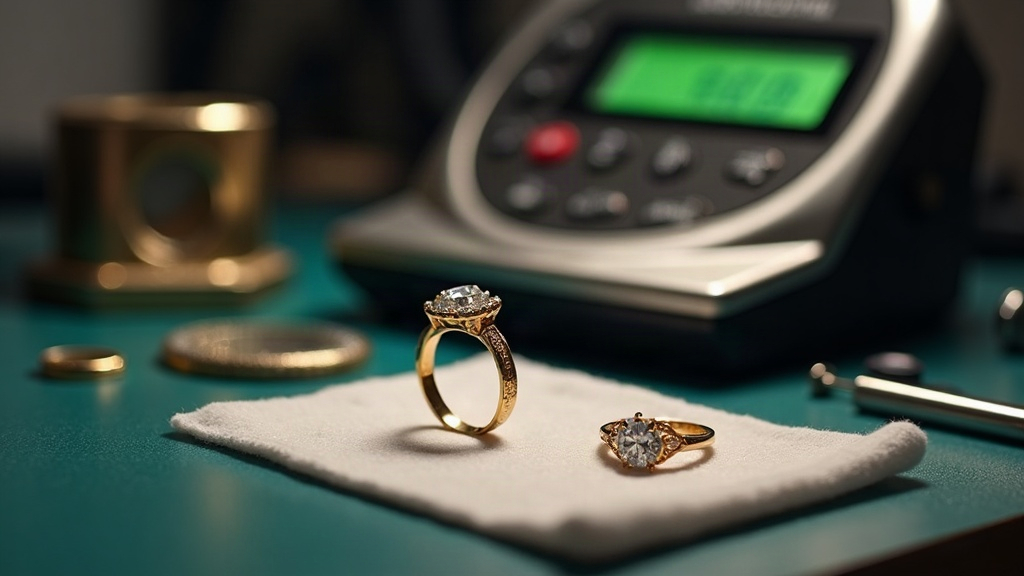
Scrap gold weight is calculated by first removing or accounting for every gemstone, then weighing only the remaining metal on a calibrated scale, and finally testing that metal’s purity to determine what portion of the total weight is actually gold. A ring with a one-carat diamond, for example, isn’t worth more because of its total heft — the diamond is valued separately, and only the gold band or setting counts toward the “scrap” weight used to calculate melt value. Understanding this process helps you know exactly what you’re being offered when you bring jewelry in for an offer.
This distinction matters a lot in Queens, where many people come in with estate pieces, engagement rings, or inherited jewelry that combines gold with diamonds, sapphires, or other stones. If you don’t know how the two values are separated, it’s easy to misjudge what your piece is actually worth. Here’s exactly how the math works.
Why Gemstones Have to Be Removed From the Equation
Gold is valued by weight and purity, typically measured in grams or pennyweights and priced against the current spot price of gold. Gemstones, on the other hand, are valued based on completely different criteria — cut, clarity, carat weight, and color for diamonds, or rarity and quality for colored stones. Mixing the two into one number would make it impossible to price either one accurately.
Because of this, any reputable shop separates the two calculations entirely. The metal is weighed and tested as scrap. The stones are assessed independently, often under magnification, to determine their own market value. The two numbers are then added together to reach a total offer.
Why This Protects You as the Seller
If a buyer weighed your ring with the diamond still mounted and simply multiplied the total weight by a gold price, you’d lose out twice. You wouldn’t get fair value for the gold, because the stone’s weight is being counted as if it were metal. And you wouldn’t get fair value for the diamond, because it’s being ignored as a separate asset entirely.
- Stones add weight but not gold content, so leaving them in inflates the “weight” without inflating actual metal value
- Diamonds and gemstones can be worth more than the gold around them, so they deserve their own appraisal
- Separating the two is the only way to give you an accurate, defensible total offer
Step One: Identifying and Removing the Stones
Before any weighing happens, an experienced appraiser examines the piece to identify every stone present — diamonds, sapphires, rubies, cubic zirconia, or anything else set into the metal. Some stones are removed physically from the setting if that can be done without damaging the piece. Others, particularly in intricate or antique settings, are accounted for using estimated weight deductions instead of physical removal.
Estimated Stone Weight Deductions
When a stone can’t be safely popped out, appraisers use standard reference charts that estimate a stone’s weight based on its measured diameter and cut. A round brilliant diamond measuring 6.5mm, for instance, has a well-documented average carat weight. That estimated weight is then converted into an approximate metal-equivalent deduction and subtracted from the gross weight of the piece.
This is standard practice across the jewelry and pawn industry, and it’s why a trained eye matters. An inexperienced appraisal can either overestimate the deduction — shortchanging you on gold value — or underestimate it, which isn’t fair to either side of the transaction.
Step Two: Weighing the Remaining Metal
Once the stone weight is identified or the stones are removed, the remaining gold is weighed on a precision scale, usually calibrated in grams or troy ounces. This is the figure that actually feeds into the scrap value calculation. Everything that follows is based on this adjusted, stone-free weight — not the original gross weight of the piece as it came through the door.
- Gross weight: the full piece as received, stones and all
- Stone weight: removed physically or estimated via standard charts
- Net metal weight: gross weight minus stone weight — this is what gets priced as gold
Step Three: Testing Gold Purity
Weight alone doesn’t determine value — purity does. A 10-gram piece of 10k gold is worth far less than a 10-gram piece of 18k gold, because the karat number reflects how much actual gold is mixed with other alloyed metals. Purity is typically confirmed using an acid test, an electronic gold tester, or X-ray fluorescence (XRF) testing for larger or more valuable pieces.
| Karat Stamp | Approximate Gold Purity |
|---|---|
| 10k | 41.7% |
| 14k | 58.3% |
| 18k | 75% |
| 22k | 91.6% |
| 24k | 99.9% |
The karat stamp inside a ring band or on a clasp is a useful starting point, but it’s not always trustworthy on its own — stamps can wear off, be misread, or occasionally be inaccurate on older or foreign-made pieces. That’s why a physical or electronic test is always part of a proper evaluation.
Step Four: Calculating the Final Scrap Value
Once the net metal weight and purity are confirmed, the math is straightforward. The net weight is multiplied by the purity percentage to find the pure gold content, and that figure is multiplied against the current market spot price for gold. Spot prices shift daily, sometimes within the same day, so the number used reflects real-time market conditions rather than a fixed rate.
- Net metal weight × purity percentage = pure gold content
- Pure gold content × current spot price = raw scrap value
- Stone value (assessed separately) added back in = total offer for the piece
Why the Offer Isn’t Just “Spot Price Times Weight”
A fair offer also accounts for the shop’s own costs of refining, testing, and resale, so the final number will typically sit below the theoretical maximum melt value. This isn’t unique to any one shop — it’s standard across the industry, similar to how a car’s trade-in value is below its full retail price. What matters most for you as the seller is transparency: knowing how the weight, purity, and stone value were each determined.
What This Means for Diamonds Specifically
Diamonds pulled from gold settings are assessed using the standard “four Cs” — carat, cut, clarity, and color — rather than simply being lumped into the metal’s weight. A high-quality diamond can sometimes be worth more than the gold surrounding it, which is exactly why it deserves its own careful evaluation rather than being melted down or ignored. If you’re bringing in a ring, pendant, or bracelet with diamonds, it helps to ask how the stones will be separately appraised before any number is discussed. You can read more about how stone evaluation works on our diamond pawning page.
Common Pieces That Combine Gold and Stones
- Engagement rings and wedding bands
- Tennis bracelets and eternity bands
- Gemstone pendants and lockets
- Vintage or estate brooches and cocktail rings
- Men’s rings with inset stones or signet details
What to Bring and What to Expect in Queens
If you’re planning to bring gold jewelry in for an offer, a few small steps can make the process faster and give you a clearer picture of what to expect. None of these are requirements, but they help.
- Bring any original receipts, appraisals, or certificates if you have them, especially for diamonds
- Know roughly what karat your gold is if it’s stamped — but expect it to be tested regardless
- Ask for the net metal weight and the stone value to be explained separately, not combined
- Bring multiple pieces at once if you’re clearing out an estate or old jewelry box, since testing is often quicker in batches
Queens residents dealing with inherited jewelry, old engagement rings, or mismatched gold pieces often aren’t sure what they’re holding until it’s properly tested. A short conversation and a few minutes on the scale and tester usually clears that up fast. For a broader look at the gold and silver side of the process, our gold and silver pawning page covers how pricing and loans work beyond just stone-set pieces.
Pawning vs. Selling Outright
Once your gold and gemstone values are calculated, you’ll typically have a choice: pawn the piece for a short-term cash loan while keeping ownership, or sell it outright for a one-time payment. Many people with sentimental pieces — a grandmother’s ring, for instance — prefer pawning, since it keeps the option open to reclaim the item later. Others simply want the cash and have no attachment to the piece, making an outright sale the simpler route.
Either way, the underlying gold and stone valuation process is the same. The only difference is what happens to the item afterward. If you’re weighing the two options, our luxury jewelry pawning page walks through how loan terms typically work for jewelry specifically.
Knowing how scrap gold weight is actually calculated — stone by stone, gram by gram — takes the mystery out of the process and puts you in a better position to ask the right questions. Whether you’re clearing out an old jewelry box or deciding what to do with a piece you no longer wear, it’s worth having the metal and the stones properly separated and tested before accepting any number. Feel free to browse more pricing guides on our blog, check out what past customers have said on our testimonials page, or stop by in person — you can find us on Google Maps whenever you’re ready to get a straightforward, transparent evaluation.
Related Posts
Learn why handheld consoles pawn differently than home systems in Queens, from wear patterns to accessory needs, so you know what to expect before you visit.
Why Handheld Consoles Pawn Differently Than Home Systems in Queens
Learn how bundled accessories affect pawn offers for drones in Queens, from controllers and batteries to cases, so you can get a fairer appraisal.
How Bundled Accessories Affect Pawn Offers for Drones in Queens
Learn how weather sealing impacts a camera’s pawn value in Queens, what appraisers check, and how to protect your gear’s worth before you pawn it.
How Weather Sealing Affects a Camera’s Pawn Value in Queens
Learn how Factory Reset Protection affects Android phone pawn eligibility and the steps to clear it before bringing your device to a pawn shop.
How Factory Reset Protection Affects an Android Phone’s Pawn Eligibility
Do pawn shops buy iPhones? Yes — learn how trade-in credit compares to cash from pawning an older iPhone, and which option fits your needs best.
Do Pawn Shops Buy iPhones? Trade-In Programs vs. Pawning Compared
Learn why a pawn shop that buys luxury watches offers more for pieces with original boxes and papers, plus tips if you no longer have the documentation.
Why Original Boxes and Papers Matter for a Luxury Watch’s Pawn Value
Thinking about luxury jewelry pawn Miami FL and Queens options? Learn how brand reputation really affects your designer jewelry’s pawn value and offer.
How Brand Reputation Affects Pawn Value for Designer Jewelry
Can you pawn lab grown diamonds? Learn how cut, color, clarity, and carat weight shape your loan offer at Queens pawn shops before you walk in.
Can You Pawn Lab Grown Diamonds? How the Four Cs Affect Value
Need cash loans for bad credit in Queens? Learn how pawn loan renewals and extensions work, with no credit check and no impact on your credit score.
How Pawn Loan Renewal and Extension Policies Work in Queens
Still owe on your car? Learn how outstanding auto loans affect cars pawn shops in Queens and whether your equity is enough to qualify for a loan.