
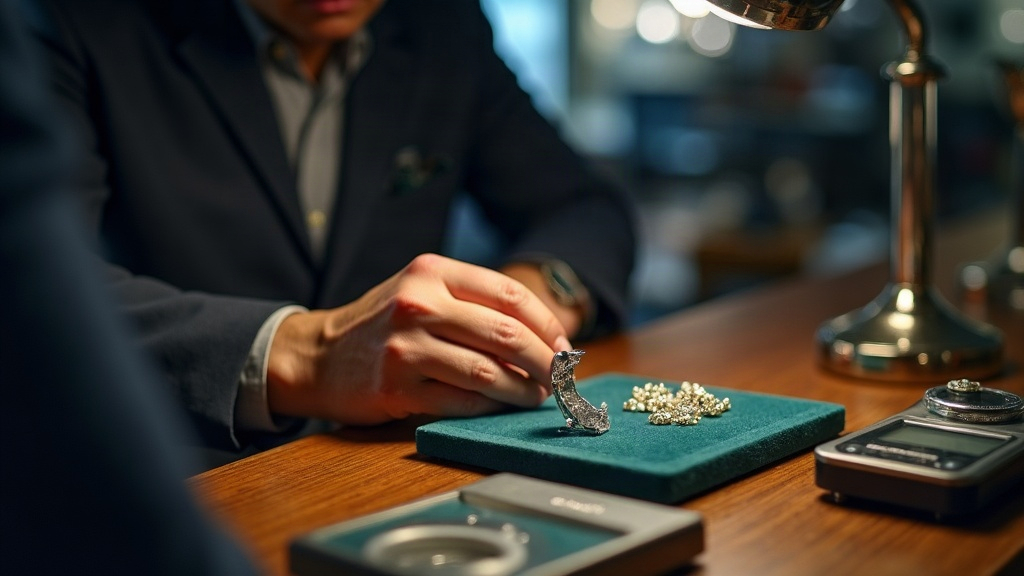
Yes, you can pawn lab grown diamonds, and most pawn shops that buy diamonds will evaluate them the same way they evaluate natural stones: by weighing the Four Cs against current resale demand. The catch is that lab grown diamonds typically carry a lower loan value than natural diamonds of the same size and grade, simply because they cost less to produce and resell. Understanding how the Four Cs work gives you a realistic picture of what to expect before you ever walk through the door.
Whether you’re holding an engagement ring, a loose stone, or an estate piece passed down through your family, the same four factors determine value: cut, color, clarity, and carat weight. Here’s how each one actually plays out when a pawnbroker in Queens is deciding what your diamond is worth.
Do Pawn Shops Buy Diamonds, Lab Grown Included?
Yes. A growing number of pawn shops that buy diamonds now accept both natural and lab grown stones, since lab grown diamonds are chemically and optically identical to mined diamonds. The main difference is origin, and that difference affects resale value more than it affects the physical qualities of the stone.
Because lab grown diamonds are more abundant and less expensive to produce, they generally resell for a fraction of what a comparable natural diamond brings. A pawnbroker has to account for that when calculating a loan offer, since the loan is secured against what the item could realistically sell for if it isn’t redeemed.
- Lab grown diamonds are evaluated using the same Four Cs as natural diamonds
- Loan values are typically lower than natural stones of identical specs
- Certification matters just as much, sometimes more, for lab grown stones
- Setting and metal type (gold, platinum) still add separate value
Cut: The Factor That Shapes Everything Else
Cut refers to how well a diamond’s facets are proportioned and angled to reflect light. A well-cut diamond sparkles; a poorly cut one looks dull even if the color and clarity are excellent. This is often the most overlooked factor by diamond owners, yet it’s one appraisers check first.
For pawn purposes, cut quality affects both appearance and marketability. A diamond with excellent cut grading is easier to resell quickly, which makes a pawnbroker more comfortable extending a stronger loan against it.
What Appraisers Look For
- Symmetry and proportion of the facets
- Polish quality and surface finish
- Light performance — brilliance, fire, and scintillation
- Depth and table percentage relative to the diamond’s diameter
Color: Why “Whiter” Isn’t Always the Full Story
Diamond color is graded on a scale from D (colorless) to Z (noticeably yellow or brown). Most diamonds used in jewelry fall in the near-colorless to faint range, and the difference between grades can be subtle to the untrained eye but significant in value.
Lab grown diamonds can be produced across the same color range as natural stones, including very high grades. A colorless lab grown diamond will still outperform a lower-color natural diamond in appearance, but the pawn value comparison still tends to favor the natural stone due to market demand.
- D-F: Colorless, the most sought-after and valuable range
- G-J: Near-colorless, excellent value for the price
- K-M: Faint color, noticeable in larger stones
- N and below: Visible tint, lower resale demand
Clarity: Inclusions and What They Mean for Loan Value
Clarity measures internal inclusions and surface blemishes under 10x magnification. Fewer and smaller inclusions mean a higher clarity grade, which generally translates to a higher value. This applies equally whether the stone is natural or lab grown.
Most diamonds brought into a pawn shop fall somewhere in the middle of the clarity scale, and that’s perfectly normal. Eye-clean stones, meaning inclusions aren’t visible without magnification, tend to hold their value best.
Common Clarity Grades
- FL/IF: Flawless or internally flawless, rare and premium priced
- VVS1/VVS2: Very, very slightly included, barely visible even under magnification
- VS1/VS2: Very slightly included, minor inclusions difficult to see
- SI1/SI2: Slightly included, often eye-clean but visible under magnification
- I1-I3: Included, inclusions visible to the naked eye
Carat Weight: Size Matters, But Not in Isolation
Carat weight measures a diamond’s mass, not its size as perceived by the eye. A well-cut one-carat diamond can appear larger than a poorly cut 1.25-carat stone. Weight is also where price jumps are most dramatic, since value per carat increases at common benchmark sizes like 1.00, 1.50, and 2.00 carats.
For lab grown diamonds, larger carat weights are increasingly common and more affordable than they would be in a natural stone of the same size. This is part of why lab grown diamonds, even at impressive carat weights, don’t command the same loan amounts as natural diamonds — the supply is simply much greater.
Natural vs. Lab Grown: A Side-by-Side Look
| Factor | Natural Diamonds | Lab Grown Diamonds |
|---|---|---|
| Formation | Formed naturally over billions of years | Created in a controlled lab setting in weeks |
| Four Cs Grading | Graded the same way | Graded the same way |
| Market Value | Higher resale and loan value | Lower resale and loan value |
| Certification | GIA, AGS, and other labs | GIA, IGI, and other labs (clearly marked as lab grown) |
| Pawn Shop Acceptance | Widely accepted | Increasingly accepted, with adjusted offers |
Other Factors That Affect Your Pawn Offer
The Four Cs are the foundation, but a few other details influence what a pawn shop can offer against your diamond.
- Certification: A GIA or IGI certificate removes guesswork and usually results in a faster, more confident offer
- Setting and metal: Gold or platinum settings add intrinsic value on top of the stone itself
- Condition: Chips, cracks, or damaged prongs can reduce value regardless of the diamond’s grade
- Current market conditions: Gold and diamond markets shift, which can affect loan amounts week to week
How the Appraisal Process Works in Queens
When you bring a diamond into a pawn shop, an appraiser will examine it under magnification, check for a certificate if you have one, weigh any accompanying metal, and assess the Four Cs firsthand. This typically takes only a few minutes for a loose stone or simple ring setting.
If you’re bringing in a diamond for the first time, it helps to bring any paperwork you have — a certificate, original receipt, or appraisal document — since this can speed up the process and often supports a stronger offer. You can learn more about how the process works on the pawn diamonds page, which outlines what to expect from evaluation through payout.
Lab Grown Diamonds Set in Jewelry
Many lab grown diamonds arrive at pawn shops already set in engagement rings, pendants, or earrings rather than as loose stones. In these cases, the appraiser also factors in the metal content and overall craftsmanship of the piece, not just the stone itself.
If your item includes other gemstones, intricate metalwork, or a designer setting, it may be worth looking at it through the lens of a broader luxury jewelry pawn evaluation rather than diamonds alone, since the combined value can shift the overall loan amount.
A Few Tips Before You Pawn a Diamond
- Bring any certification or grading reports you have, even if they’re old
- Clean the stone gently beforehand so inclusions and color are easier to assess accurately
- Be upfront if the diamond is lab grown — it won’t disqualify it, but it helps set accurate expectations
- Ask questions during the appraisal so you understand how the offer was calculated
Queens has a dense, competitive jewelry market, and that works in your favor as a seller or borrower — there’s steady demand for well-graded diamonds, both natural and lab grown, across local buyers and resellers.
Ready to Have Your Diamond Evaluated?
Knowing how the Four Cs work takes the mystery out of the process, whether you’re pawning a loose stone, a ring, or a full jewelry collection. If you’d rather sell outright instead of borrowing against the piece, the sell diamonds option is worth comparing against a pawn loan to see which fits your situation better.
When you’re ready to find out what your diamond, natural or lab grown, is actually worth, stop by Conduit Pawn Shop for a no-pressure evaluation, or take a look at our Google Business Profile to see directions, hours, and reviews from other customers in the area.
Related Posts
Learn why handheld consoles pawn differently than home systems in Queens, from wear patterns to accessory needs, so you know what to expect before you visit.
Why Handheld Consoles Pawn Differently Than Home Systems in Queens
Learn how bundled accessories affect pawn offers for drones in Queens, from controllers and batteries to cases, so you can get a fairer appraisal.
How Bundled Accessories Affect Pawn Offers for Drones in Queens
Learn how weather sealing impacts a camera’s pawn value in Queens, what appraisers check, and how to protect your gear’s worth before you pawn it.
How Weather Sealing Affects a Camera’s Pawn Value in Queens
Learn how Factory Reset Protection affects Android phone pawn eligibility and the steps to clear it before bringing your device to a pawn shop.
How Factory Reset Protection Affects an Android Phone’s Pawn Eligibility
Do pawn shops buy iPhones? Yes — learn how trade-in credit compares to cash from pawning an older iPhone, and which option fits your needs best.
Do Pawn Shops Buy iPhones? Trade-In Programs vs. Pawning Compared
Learn why a pawn shop that buys luxury watches offers more for pieces with original boxes and papers, plus tips if you no longer have the documentation.
Why Original Boxes and Papers Matter for a Luxury Watch’s Pawn Value
Thinking about luxury jewelry pawn Miami FL and Queens options? Learn how brand reputation really affects your designer jewelry’s pawn value and offer.
How Brand Reputation Affects Pawn Value for Designer Jewelry
Learn how scrap gold weight is calculated after removing gemstones in Queens, including stone deductions, purity testing, and how final offers are determined.
How Scrap Gold Weight Is Calculated After Removing Gemstones in Queens
Need cash loans for bad credit in Queens? Learn how pawn loan renewals and extensions work, with no credit check and no impact on your credit score.
How Pawn Loan Renewal and Extension Policies Work in Queens
Still owe on your car? Learn how outstanding auto loans affect cars pawn shops in Queens and whether your equity is enough to qualify for a loan.