
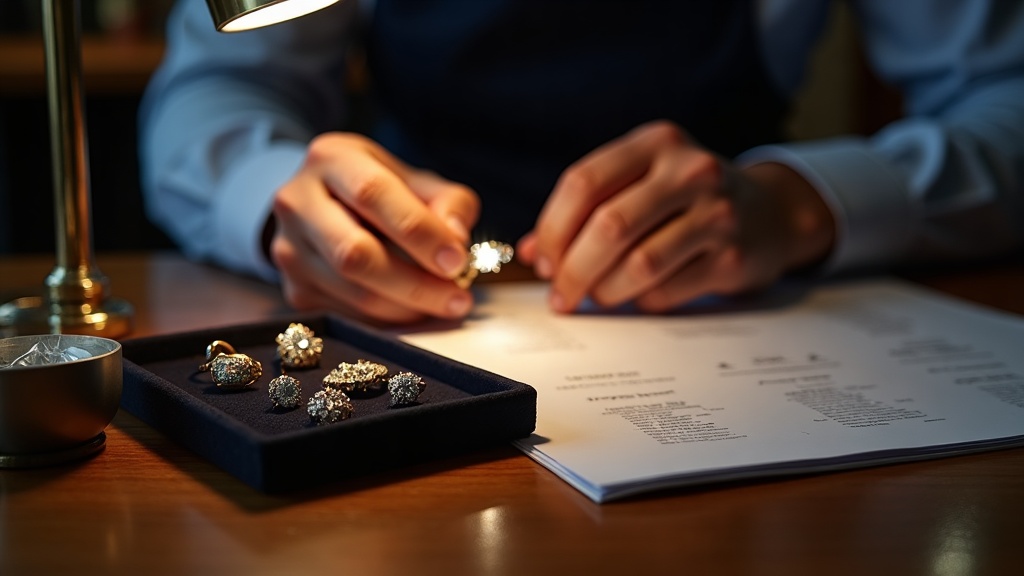
Not all jewelry gets the same offer at a pawn shop, and the gap between a low offer and a strong one can be surprisingly large. Several specific, measurable factors drive that difference — and understanding them before you walk in puts you in a far better position to get fair value for what you own.
Metal Type and Purity Matter More Than You Think
The single biggest driver of a pawn shop’s offer on most jewelry pieces is the metal itself. Gold, platinum, and silver all have live spot-market prices that appraisers check in real time. Higher purity means more of that valuable metal per gram.
- Gold hallmarks: 24K (99.9% pure), 18K (75%), 14K (58.5%), 10K (41.7%). A 18K gold bracelet will always fetch more than a visually identical 10K piece.
- Platinum: Typically stamped 950 or 900. Platinum is denser and heavier than gold, so even a small ring can carry meaningful weight value.
- Silver: Sterling silver (925) is the standard for quality pieces. Silver’s spot price is lower than gold, but weight still matters — a heavy sterling cuff is worth real money.
Always look for the hallmark stamp inside a ring’s shank, on a chain’s clasp, or on the back of a pendant. If you can’t find one, a reputable appraiser will test the metal directly — never guess.
If you have gold or silver pieces to evaluate, Conduit’s pawn gold and silver service gives you a live-market assessment so you know exactly what your metal is worth before any decision is made.
Diamond and Gemstone Quality — The 4 Cs Still Apply
A diamond’s value at a pawn shop is governed by the same 4 Cs that guide retail pricing: cut, color, clarity, and carat weight. The difference is that pawn appraisers assess resale value, not retail replacement cost, so having documentation helps close the gap.
- Carat weight: Larger stones command exponentially higher prices, not just linearly. A 2-carat diamond is worth considerably more than two 1-carat stones of the same quality.
- Cut: A well-cut diamond reflects light brilliantly and is easier to resell. Poor cuts suppress value even in high-carat stones.
- Color: The D–Z grading scale matters. Near-colorless stones (D–J range) hold more resale value than heavily tinted ones.
- Clarity: Eye-clean stones (VS2 and above) are significantly more desirable to buyers, which directly influences what a pawn shop can offer.
A GIA or AGS certificate is not required, but it removes guesswork and typically results in a stronger offer because the appraiser doesn’t need to apply a large uncertainty discount.
For a detailed look at how diamonds are evaluated, visit the pawn diamonds page to understand the process before your visit.
Designer Brand and Maker’s Mark
Two bracelets made from the same 18K gold can fetch very different amounts if one carries a Cartier, Tiffany, or Van Cleef & Arpels hallmark. Luxury brand jewelry commands a premium because:
- There is an active secondary market of buyers specifically seeking named brands.
- The craftsmanship and design are verifiable and recognizable, reducing resale risk for the shop.
- Original packaging and paperwork further authenticate the piece and reduce friction at resale.
Generic or costume jewelry — even if it looks beautiful — has almost no resale premium beyond its raw metal content. Brand-name pieces, by contrast, are evaluated on both metal value and brand value, which is why they consistently receive stronger pawn offers.
Condition: Small Details Have a Large Impact
A luxury piece in excellent condition will always outperform the same piece in poor condition, sometimes dramatically. Pawn appraisers look for:
- Deep scratches, dents, or bent prongs on settings
- Missing stones or loose settings
- Broken clasps, stretched chains, or cracked enamel
- Signs of poor-quality repairs or non-original components
Minor surface wear is expected on worn jewelry and typically doesn’t hurt an offer significantly. Structural damage, however, adds cost and uncertainty to any potential resale, and appraisers factor that in directly.
Tip: Have pieces professionally cleaned before bringing them in — not repaired speculatively, but cleaned. A polished piece photographs and presents better, and the appraiser can assess it accurately without surface grime obscuring hallmarks or stone condition.
Documentation and Provenance
Paperwork isn’t mandatory, but it consistently raises offers. Useful documents include:
- Original retail receipts or purchase invoices
- Diamond grading reports (GIA, EGL, IGI)
- Independent appraisal certificates (especially recent ones)
- Original branded packaging, boxes, and pouches
- Warranty cards or brand service records
Documentation gives the appraiser confidence in authenticity, reduces the time needed to verify details, and makes the piece easier to sell — all of which translate into a stronger offer for you.
Comparing Jewelry Types: What Typically Gets the Strongest Offers
| Jewelry Type | Key Value Drivers | Typical Offer Strength |
|---|---|---|
| Designer brand pieces (Cartier, Tiffany, etc.) | Brand premium + metal + stones | High |
| High-carat solitaire diamond rings | Stone quality, certification, setting | High |
| 18K or platinum estate jewelry | Metal purity, weight, condition | Moderate to High |
| 14K gold chains and bracelets | Metal weight and purity | Moderate |
| Sterling silver pieces | Weight, condition, brand if applicable | Moderate to Low |
| Fashion or costume jewelry | Almost no resale premium | Low |
Should You Pawn or Sell Your Luxury Jewelry?
Pawning means using your jewelry as collateral for a short-term loan — you get cash now and reclaim the piece when you repay. Selling means a permanent transfer in exchange for immediate payment. Neither is inherently better; the right choice depends on whether you want the piece back.
If you’re still emotionally attached to a ring or necklace but need liquidity quickly, pawning preserves your option to reclaim it. If you’ve decided to part with it permanently, selling typically yields a higher immediate return. Either way, understanding the factors above puts you in control of the conversation.
For a full walkthrough of how the process works with high-end pieces, explore Conduit’s luxury jewelry pawning service — the appraisal is free and there’s no obligation.
How to Prepare Before Bringing Your Jewelry In
A few simple steps before your visit can meaningfully improve your outcome:
- Gather all paperwork — grading reports, appraisals, receipts, and original boxes.
- Clean the piece gently with a soft cloth so hallmarks and stones are clearly visible.
- Research recent sold prices for comparable pieces on secondary market platforms — this gives you a realistic reference point, not a wishful retail figure.
- Know the difference between retail replacement value (on an insurance appraisal) and resale market value — they are rarely the same number.
- Be ready to ask questions. A trustworthy appraiser will explain exactly how they arrived at their number.
Customers in the Queens area — and those coming in from nearby communities — consistently find that preparation leads to a faster, more confident transaction on both sides.
Ready to Find Out What Your Jewelry Is Worth?
Luxury jewelry holds real value, and the factors above — metal purity, stone quality, brand, condition, and documentation — are what determine how much of that value you can access at a pawn shop. Walking in informed is the single most effective thing you can do to get a fair offer.
When you’re ready to get an expert, no-pressure appraisal, find Conduit Pawn Shop on Google Maps for hours, directions, and contact information. The team is straightforward about how pieces are valued, and there’s never any obligation to accept an offer.
Related Posts
Learn why handheld consoles pawn differently than home systems in Queens, from wear patterns to accessory needs, so you know what to expect before you visit.
Why Handheld Consoles Pawn Differently Than Home Systems in Queens
Learn how bundled accessories affect pawn offers for drones in Queens, from controllers and batteries to cases, so you can get a fairer appraisal.
How Bundled Accessories Affect Pawn Offers for Drones in Queens
Learn how weather sealing impacts a camera’s pawn value in Queens, what appraisers check, and how to protect your gear’s worth before you pawn it.
How Weather Sealing Affects a Camera’s Pawn Value in Queens
Learn how Factory Reset Protection affects Android phone pawn eligibility and the steps to clear it before bringing your device to a pawn shop.
How Factory Reset Protection Affects an Android Phone’s Pawn Eligibility
Do pawn shops buy iPhones? Yes — learn how trade-in credit compares to cash from pawning an older iPhone, and which option fits your needs best.
Do Pawn Shops Buy iPhones? Trade-In Programs vs. Pawning Compared
Learn why a pawn shop that buys luxury watches offers more for pieces with original boxes and papers, plus tips if you no longer have the documentation.
Why Original Boxes and Papers Matter for a Luxury Watch’s Pawn Value
Thinking about luxury jewelry pawn Miami FL and Queens options? Learn how brand reputation really affects your designer jewelry’s pawn value and offer.
How Brand Reputation Affects Pawn Value for Designer Jewelry
Learn how scrap gold weight is calculated after removing gemstones in Queens, including stone deductions, purity testing, and how final offers are determined.
How Scrap Gold Weight Is Calculated After Removing Gemstones in Queens
Can you pawn lab grown diamonds? Learn how cut, color, clarity, and carat weight shape your loan offer at Queens pawn shops before you walk in.
Can You Pawn Lab Grown Diamonds? How the Four Cs Affect Value
Need cash loans for bad credit in Queens? Learn how pawn loan renewals and extensions work, with no credit check and no impact on your credit score.